


Urology Awareness Month: Understanding Your Bladder and When to Seek Help
Your bladder is one of the most honest parts of your body. It tells you when something has shifted, often long before anything else does. Here is what normal actually looks like, what the warning signs are, and how quickly to act on each one.
Most of us give the bladder very little thought until it starts making demands. Then, suddenly, it is running the day: planning routes around toilets, cutting drinks before a long meeting, waking you at three in the morning, or leaking a little when you laugh at something you did not see coming.
September is Urology Awareness Month, and it exists precisely because so many people carry those changes quietly. The reasons are almost always the same: embarrassment, the assumption that it is just age, and the hope that it will settle on its own. This guide covers how the bladder works, what counts as normal, and exactly how urgently to act when something looks wrong.
A note before we start: this article is general information based on NHS and charity guidance. It is not personal medical advice. If something here sounds like you, please speak to a GP, pharmacist or continence nurse rather than self-diagnosing.
Why September, and why urine
Urology Awareness Month is run each September by The Urology Foundation, the only UK charity dedicated to all urology diseases. The 2026 campaign is called Worth its Weight in GOLD, and its argument is simple: urine is not waste, it is information. The Foundation's ask this year is short enough to remember, which is rather the point. Take control. Check your urine.
The scale is easy to underestimate. The Urology Foundation states that 1 in 2 of us will experience a urology condition in our lives, and Bladder & Bowel UK estimates that around 14 million people in the UK live with some form of continence problem. That is not a rare, unlucky minority.
And yet bladder health remains one of the last genuinely awkward conversations. People will discuss their blood pressure over lunch and say nothing about the fact that they have stopped going to the cinema.
How your bladder actually works
It helps to know what you are working with.
The bladder is a muscular, stretchy bag that sits low in the pelvis. Urine trickles into it continuously from the kidneys and the bladder expands to hold it, while the muscle in the bladder wall, the detrusor, stays relaxed. Holding on is a team effort: a ring of muscle at the bladder outlet, the sphincter, stays squeezed shut, and underneath it the pelvic floor, a hammock of muscle across the base of the pelvis, adds support and a second layer of control. Everybody has a pelvic floor, regardless of sex.
When the bladder reaches a certain point, nerves send a signal to the brain. Crucially, that first signal is not an emergency. In a bladder that is behaving itself you get plenty of notice, and you can override the message until it suits you.
Problems tend to show up in one of three places. The bladder muscle starts contracting when it should be relaxing, which produces urgency. The sphincter and pelvic floor stop holding well enough under pressure, which produces leaks. Or something obstructs the outlet, which makes emptying difficult and incomplete.
What normal looks like
There is more room in "normal" than most people assume.
How often. According to the Bladder & Bowel Community, most people pass urine 6 to 7 times in 24 hours, and anywhere between 4 and 10 times a day can be normal if you are otherwise well and comfortable with it. Their rough guide to when frequency has become a problem: needing to go more than seven times a day while drinking about 2 litres of fluid.
How much you drink. The NHS advice for people with bladder symptoms is 6 to 8 glasses of fluid a day, and no more, unless a doctor has told you otherwise. This one surprises people, because the instinct when you are leaking is to drink less. Cutting fluids concentrates the urine, irritates the bladder lining and shrinks the volume the bladder is used to holding. It reliably makes things worse.
What it looks like. Aim for pale. NHS guidance on drinking enough is framed around passing pale urine regularly through the day. Cloudy, strong-smelling urine alongside other symptoms points towards infection and is worth acting on.
At night. Waking occasionally is common, particularly as we get older. What matters more than the number is the change. If you used to sleep through and now you are up repeatedly, mention it.
Getting there in time. Normal means having enough warning to finish a sentence and walk to a toilet. If the signal has become sudden and non-negotiable, that is urgency, and urgency is a symptom, not a personality trait.
When your bladder changes: the usual reasons
Urinary tract infections
The NHS lists the common signs as pain or burning when passing urine, needing to go more often than usual, cloudy urine, dark or strong-smelling urine, lower tummy pain or pain in the back just under the ribs, a high temperature, and feeling tired or unwell.
Two things worth knowing. In children, a UTI may show up as a high temperature, bedwetting, being sick, or simply seeming unwell rather than any classic urinary symptom. In older or frail people, the first sign is often behavioural: new agitation or confusion, worsening incontinence, or new shivering. Confusion in an older relative is a medical symptom, not just a bad day.
Overactive bladder and urgency
Here the bladder muscle contracts before it needs to, producing a sudden, powerful urge that is difficult to defer. Some people leak before they get there, which the NHS classifies as urge incontinence. It responds well to bladder training and, where needed, to treatment. It is not something to simply live around.
Stress incontinence
The NHS describes this as urine leaking "at times when your bladder is under pressure; for example, when you cough or laugh". Sneezing, lifting, running and getting out of a chair are the other usual culprits. It is caused by a pelvic floor that is not holding as well as it once did, and the risk factors the NHS lists include pregnancy and vaginal birth, obesity, family history and increasing age.
Prostate changes
For anyone with a prostate, the gland tends to enlarge with age, most commonly in men over 50. The NHS symptom list is distinctive: difficulty starting, having to push or strain, a weak flow that stops and starts, feeling that the bladder has not emptied, dribbling afterwards, and needing to go more often, including at night. Enlargement is usually benign, but it is still worth having looked at, because the symptoms overlap with conditions that need finding early.
Catheters, stomas and after surgery
Bladder function often changes after pelvic or abdominal surgery, and anyone managing a catheter, a urostomy or a colostomy has a set of daily practicalities on top of the medical picture. If that is you, our guides on adjusting to life with a stoma and stoma reversal go into more detail.
Constipation
A loaded bowel presses directly on the bladder and reduces the space it has to fill. It is one of the most common and most fixable contributors to urgency, and it is routinely missed.
Red flags, and how fast to act
This is the part worth keeping. The urgency levels below follow current NHS guidance.
Call 999 or go to A&E if:
- You, or the person you care for, become confused, drowsy or have difficulty speaking alongside signs of a urine infection. The NHS treats this as an emergency.
Ask for an urgent GP appointment or contact NHS 111 today if:
- There is blood in your urine. The NHS advice is to seek urgent help whether or not you have other symptoms, and however small the amount. Urine may look pink, red or brown. Most causes are not cancer, and that is exactly why it is worth checking quickly.
- You cannot pass urine at all.
- You have pain when passing urine.
- You are over 65, or caring for a child under 16, and there are signs of infection.
- Infection symptoms are not improving 48 hours after starting treatment.
Make a routine GP appointment this week if:
- You are leaking, at all, of any type. The NHS is unambiguous: "See a GP if you have any type of urinary incontinence. Urinary incontinence is a common problem and you should not feel embarrassed talking to them."
- You are going noticeably more often than you used to, or waking repeatedly at night when you did not before.
- You have to strain to start, your flow has weakened, or you feel you are not emptying properly.
- Urgency is changing what you do: which routes you take, which events you accept, how much you drink.
That last one is the honest test. If your bladder has started making decisions on your behalf, it has earned an appointment.
The everyday habits that genuinely help
None of this replaces medical advice. All of it is worth doing alongside it.
Keep a bladder diary for three days. Write down what you drink and when, every time you pass urine, and any leaks and what you were doing at the time. Three days of real data tells a GP or continence nurse more in thirty seconds than ten minutes of trying to remember, and it usually reveals the pattern to you first.
Do your pelvic floor exercises properly. The NHS method for the quick version: squeeze your pelvic floor muscles fast, try not to pull your tummy in, hold the squeeze for 2 seconds, and repeat 10 times. Build gradually towards 10 second holds. The mistakes are always the same: holding your breath, clenching your buttocks, or giving up after a fortnight. Improvement takes weeks rather than days, so anchor it to something you already do daily.
Drink properly, not less. Six to eight glasses a day, spread out, unless you have been advised otherwise. The NHS singles out coffee as having the biggest irritant effect and suggests stopping it or switching to decaffeinated. Fizzy drinks, tea, energy drinks, hot chocolate and alcohol are worth reducing too, and spicy or acidic foods bother some people.
Sort out constipation, and stop smoking if you smoke. A loaded bowel crowds the bladder, and a persistent cough puts the pelvic floor under repeated strain.
Get a Just Can't Wait card. The Bladder & Bowel Community offers a free digital toilet access card that sits in your phone's wallet, with a plastic version available for £3.95. It uses recognised WC symbols so you can ask without explaining. Small thing, disproportionate difference.
Have a disposal plan you trust. A great deal of the anxiety around bladder symptoms is not medical at all. It is the worry about what happens to a used pad or pouch in someone else's bathroom, in a shared washroom at work, or in a car park with no bin in sight.
From our shop
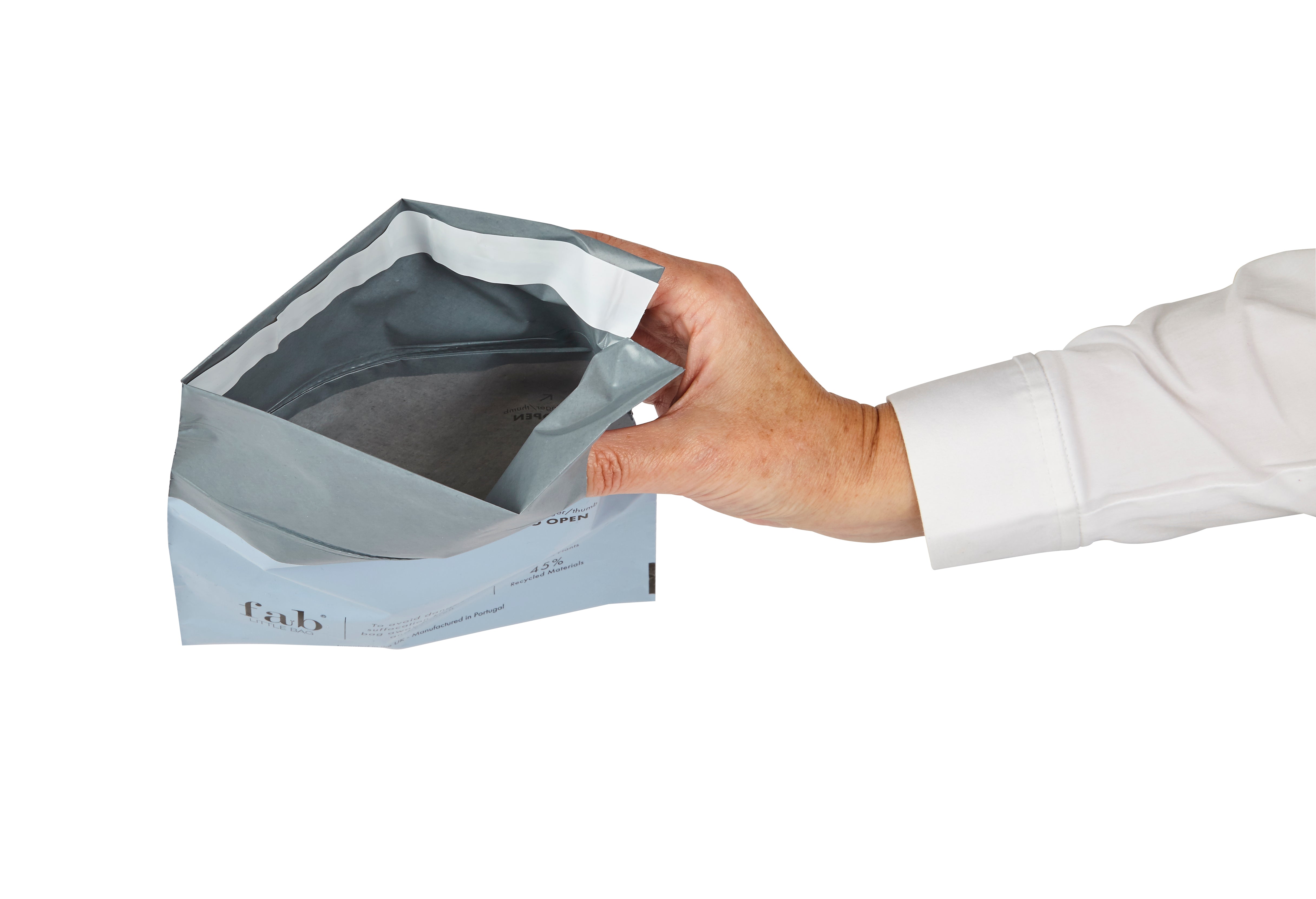
HyGeeni Disposal Bags · £12.99
Opaque, sealable disposal bags for incontinence pads, sheaths, catheters, stoma pouches and nappies. Made mostly from plants, they open with one hand and seal firmly shut to hold odour in, so you always have a dignified option wherever you are. 50 bags per pack.
Out and about with confidence
Most people who manage bladder symptoms well have quietly built a system. It usually looks like this.
A small kit that lives in the bag. Spare pad or pouch, wipes, hand gel, a couple of disposal bags, and a change of underwear if you have had a difficult few weeks. Keeping it packed removes the daily decision about whether today is a day you might need it, and a duplicate in the car or the desk drawer is worth the small cost.
A disposal habit you do not have to think about. HyGeeni bags were designed for exactly this moment: opaque so nobody can see what is inside, sealable so nothing escapes, and small enough to carry without bulk. Used items go in a general waste bin, never down the toilet.
A bathroom at home that is set up for it. If someone in the house is managing incontinence, a catheter or a stoma, the difference between a good routine and a stressful one is often just having the right thing within arm's reach.
From our shop
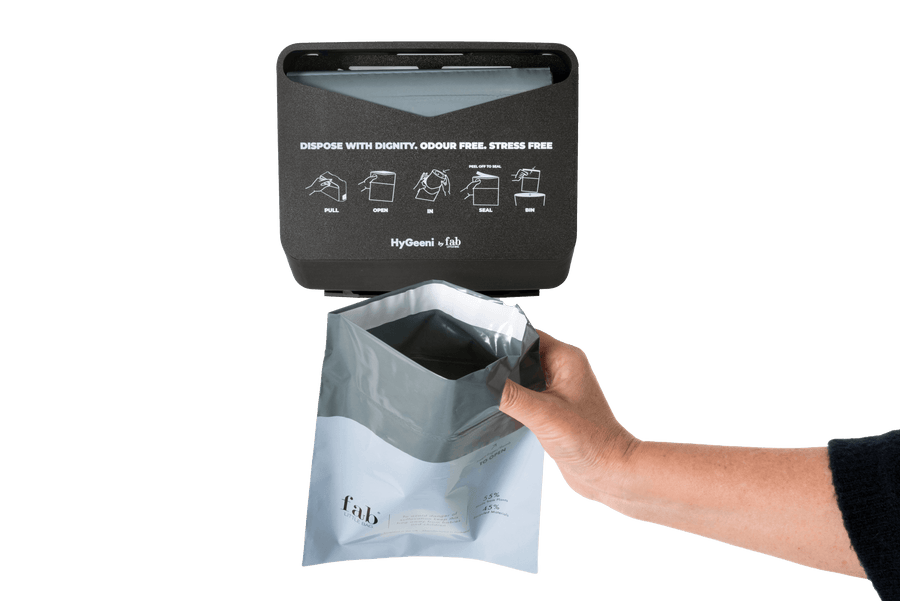
HyGeeni Dispenser Starter Pack · £59.00
A wall-mounted dispenser that holds up to 50 HyGeeni bags and delivers them one-handed, plus a free pack of 50 bags to get started. Made from recycled PLA and recyclable at the end of its life. Well suited to a bathroom at home, a workplace washroom, a school or a care setting.
Heat and travel need a bit more thought. Warm weather changes skin, hydration and how often you need to go. We covered that in detail in managing incontinence in the summer heat.
Having the conversation
A few things make the appointment easier:
- Take the bladder diary and a list of your medicines. Between them they do most of the talking, and some medicines affect bladder function.
- Lead with the impact, not just the symptom. "I have stopped going swimming" lands differently from "I leak sometimes", and it tells the clinician what success would look like for you.
- Ask about a continence service. Many areas have specialist continence nurses, and some accept self-referral.
If you are supporting a child or teenager through continence issues, the dynamics are different again, and we wrote about that in our back to school continence guide.
Your bladder health checklist
☐ I know roughly how many times a day I pass urine, and whether it has changed
☐ I am drinking 6 to 8 glasses of fluid a day, not restricting
☐ My urine is usually pale, not dark
☐ I have looked honestly at how much caffeine and alcohol I drink
☐ I am doing pelvic floor exercises, correctly, most days
☐ Constipation is not an ongoing problem for me
☐ I have kept a three day bladder diary, or I have a date in the diary to start one
☐ I know the red flags: blood in urine, unable to pass urine, pain when passing urine, confusion alongside infection symptoms
☐ I have a disposal plan I trust, at home and out of the house
☐ I have booked, or I know what would make me book, a GP appointment
Frequently asked questions
How many times a day is it normal to pee?
The Bladder & Bowel Community puts the usual range at 6 to 7 times in a 24 hour period, and says anywhere between 4 and 10 times a day can be normal for a healthy person who is comfortable with it. They suggest that going more than seven times a day while drinking around 2 litres of fluid may indicate a frequency problem. The more useful measure is change: if you are going noticeably more often than you used to, raise it with a GP regardless of where the number sits.
What colour should my urine be?
Pale is the target. NHS guidance on staying hydrated is framed around passing pale urine regularly through the day, so darker urine usually means you are not drinking enough. Cloudy or strong-smelling urine, especially alongside burning, frequency or a temperature, points towards a possible urine infection and is worth acting on rather than waiting out. Any pink, red or brown colouring needs an urgent GP appointment or a call to NHS 111 the same day.
Is it normal to wake up at night to pee?
Waking occasionally is common and becomes more so with age, so what matters is the pattern rather than a single number. If you previously slept through and now wake repeatedly, or the change came on quickly, mention it to a GP. Nighttime waking can be linked to prostate changes, fluid timing, medicines or other health conditions, so it is worth having looked at rather than accepting as inevitable.
When should I worry about blood in my urine?
Always act on it, straight away. NHS guidance is to ask for an urgent GP appointment or get help from NHS 111 if there is blood in your urine, whether or not you have other symptoms and however small the amount. The colour may look pink, red or brown. Common causes include urine infections, kidney stones and an enlarged prostate, and it can also be a sign of cancer, which is far easier to treat when found early. Do not wait to see if it happens again.
Do pelvic floor exercises work for men as well as women?
Yes. Everybody has a pelvic floor, and strengthening it helps with leaks, urgency and control regardless of sex. It is a routine part of recovery after prostate surgery. The NHS technique is the same: squeeze the muscles without pulling your tummy in, hold for 2 seconds, repeat 10 times, and build towards 10 second holds. If you are unsure you are engaging the right muscles, ask a GP for a referral to a specialist physiotherapist rather than guessing.
How do I dispose of incontinence pads, catheter equipment or stoma pouches when I am away from home?
Used pads, pouches and personal medical items go in a general waste bin, never down the toilet, because flushing them causes blockages in homes and in the wider sewer network. An opaque, sealable disposal bag lets you wrap the item, seal it and carry it to the nearest bin without anyone seeing what is inside or noticing any odour. Keeping a few in a coat pocket, a handbag or the car glovebox is the simplest way to make sure a missing bin never becomes a problem.
Resources
- The Urology Foundation for Urology Awareness Month, condition information and the 2026 campaign materials
- NHS: Urinary incontinence and How to help a weak bladder
- NHS: Urinary tract infections
- NHS: Blood in urine
- NHS: Enlarged prostate
- Bladder & Bowel UK confidential helpline staffed by specialist nurses, 0161 214 4591
- Bladder & Bowel Community: free Just Can't Wait card
HyGeeni is part of The Fab Bag Company. We make opaque, sealable disposal bags, made mostly from plants, for the moments that deserve a bit more dignity than a folded piece of tissue and a hopeful glance around the room.