


Nappy Disposal at Home and on the Go: A Practical Guide for Parents
Thousands of nappy changes, one small baby, and a lot of bins. Here is how to deal with used nappies cleanly and calmly, at home, in the car, at a friend's house and on days out.
Nobody tells you, before the baby arrives, quite how much of your life will be spent thinking about nappies. Not just changing them, but what to do with them afterwards. Where the used one goes when you are in a friend's spotless bathroom. How to stop the kitchen bin smelling by Wednesday. What to do in the car park when the nearest bin is overflowing.
The NHS says to expect to change a newborn's nappy around 10 to 12 times a day, and an older baby's around 6 to 8 times a day. That is a lot of nappies, and every one of them needs to go somewhere.
This guide is all about that "somewhere". It covers nappy disposal at home and on the go, keeping smells under control, why nappies and wipes never go down the toilet, and how to make the whole thing a little easier, whether you use disposables, reusables or a mix of both. There is no judgement here about which you choose. Every family does what works for them.
A note before we start: this article is general information based on NHS guidance. It is not medical advice. If you are ever worried about your baby's health, speak to your health visitor, GP or NHS 111.
Why nappy disposal matters more than you might think
A used nappy is one of the most ordinary objects in the world. But how it is handled makes a real difference, to your home, to other people, and further down the line.
Hygiene. Nappies carry germs. The NHS advises washing your hands before you change a nappy and again afterwards, before you do anything else.
Smell. A nappy bin that is not managed well can fill a room, especially in a warm house or a small flat. A few simple habits, covered below, make a big difference.
Dignity and comfort. For parents, there is a quiet stress in changing a nappy somewhere that is not your own home. Having a discreet, sealable way to deal with it means you are not hunting for a bin while holding a warm parcel, or apologising to your host.
What happens next. Recycling charity Wrap estimates that around three billion disposable nappies are thrown away in the UK each year. They cannot be recycled, and when they end up in the wrong place, such as a recycling bin or a toilet, they cause real problems further down the line.
The golden rule: nappies never go down the toilet
This one is simple. Disposable nappies, wipes and liners do not go down the toilet, however small they are, and whatever the packaging says.
Only the three Ps should ever be flushed: pee, poo and paper. Nappies are designed to hold liquid, so they swell rather than break down, and wipes are made to stay strong when wet. Both can block your own pipes, and further along, they contribute to the blockages that water companies spend millions clearing every year. We explain more in The Three P's Rule: What You Should Actually Flush Down the Toilet.
The one thing that can go down the toilet is solid poo. If it is practical, tipping solid poo from a nappy into the toilet before you wrap it reduces smell in the bin. It is not essential, and nobody expects you to manage it every time, especially with a wriggling baby. But it helps, and it is the standard approach with reusable nappies.
Disposing of nappies at home
The NHS advice for disposables is straightforward: roll the nappy up, reseal it with its tabs, put it in a plastic bag kept only for nappies, tie it up and put it in an outside bin.
Here is how to make that work day to day.
Set up a changing station
A well-organised changing area makes every change quicker and cleaner. Keep everything within reach so you never have to step away from your baby. The NHS advises staying with your baby at all times when they are on a changing table. Your station should include:
- Clean nappies
- Cotton wool and a bowl of warm water, or gentle, non-scented, alcohol-free wipes, as the NHS suggests
- Barrier cream, if you use it
- A change of clothes
- Disposal bags within one-handed reach
- Hand gel or easy access to a sink
Wrap every nappy
Rolling the nappy up with the tabs is a good start, but it does not seal in smells. Sealing each nappy in its own bag before it goes in the bin makes the biggest single difference to how your home smells. Look for bags that are opaque, so nobody has to see what is inside, and that tie or seal shut properly.
From our shop
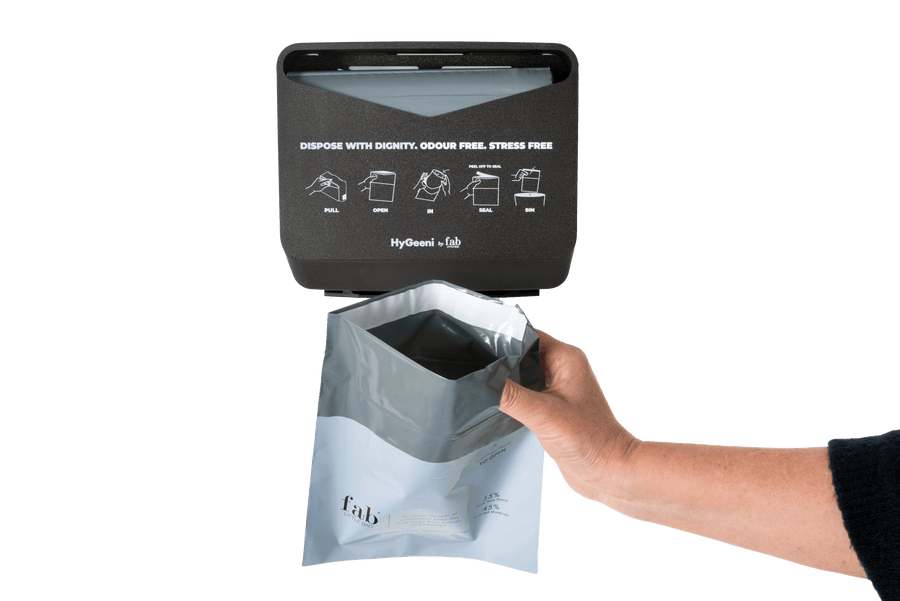
HyGeeni Dispenser Starter Pack · £59.00
A wall-mounted dispenser that holds up to 50 HyGeeni bags and lets you take one out with one hand, plus a free pack of 50 bags to get started. Made from recycled PLA and recyclable at the end of its life. Perfect for the changing station, where your other hand is always busy.
Keep the bin under control
- Use a lidded bin for nappies, ideally one that is used only for nappies
- Empty it often, at least daily in warm weather, and take it straight to the outside bin
- Wash the bin regularly with hot soapy water, and let it dry fully before you use it again
- Keep the outside bin lid closed, and keep it in the shade if you can in summer
Put nappies in the right outside bin
Used nappies go in your general waste bin, not recycling. Councils are clear about this. West Sussex County Council, for example, says disposable nappies cannot be recycled and can contaminate recycling batches. Research for the North London Waste Authority found that 1 in 10 UK parents of under-threes said they put nappies in their household recycling. The authority ran a campaign to stop it, because soiled nappies have to be picked off sorting lines by hand.
The cardboard or paper packaging from a pack of nappies can usually go in your recycling. Check your council's guidance for the plastic wrap.
Wash your hands
The NHS advises washing your hands after every nappy change, before you do anything else.
Disposing of nappies on the go
Nappy changes on days out are where the real challenges begin, especially in the autumn half-term, when you are more likely to be somewhere unfamiliar. Here is how to stay prepared.
Pack a grab-and-go changing kit
Keep a small kit in your changing bag that is always restocked when you get home:
- More nappies than you think you need
- Wipes
- A portable changing mat
- A spare set of clothes, for your baby and possibly for you
- Barrier cream
- Hand gel
- Several sealable disposal bags, so you are never stuck without one
From our shop
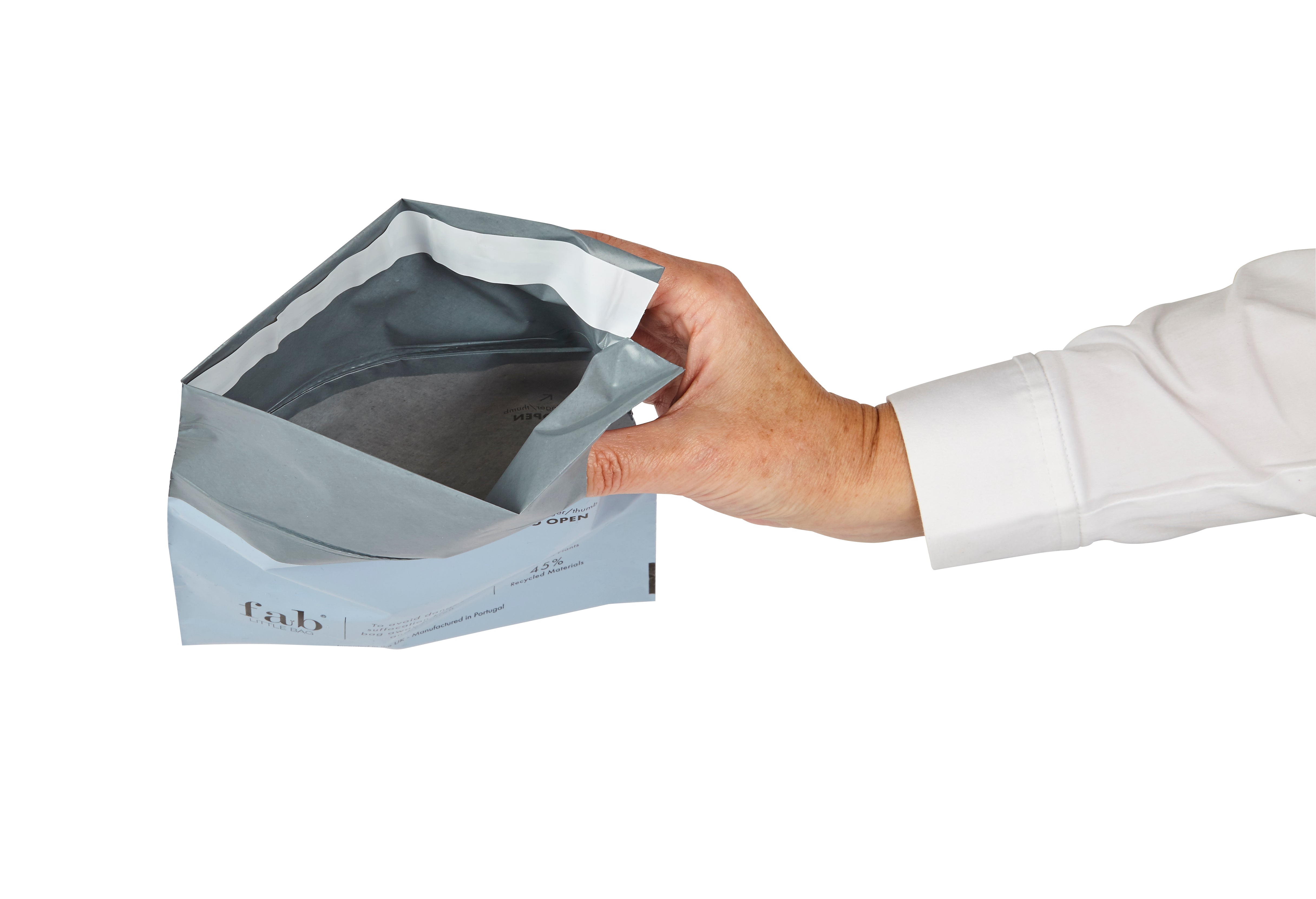
HyGeeni Disposal Bags · £12.99
Opaque, sealable disposal bags that open with one hand and seal firmly shut to hold odour in. Small enough to keep in a changing bag, car door or coat pocket, and strong enough for nappies, wipes and anything else you need to take away. Made mostly from plants. 50 bags per pack.
Changing in public toilets and baby change rooms
Most baby change facilities have a nappy bin, but not all of them are emptied as often as they should be. Seal the nappy in a bag before you put it in, so it does not add to the smell for the next parent. If the bin is full or missing, take the sealed nappy with you to the next bin you see.
In the car
The car is one of the most common places for an emergency change, and one of the worst places to leave a used nappy. Never leave one in the car, even sealed, especially in warm weather. Keep a couple of bags in the door pocket, seal the nappy straight away, and put it in the first bin you pass.
At friends' and family's houses
This is the one many parents worry about. Your host may not have a nappy bin, and the bathroom bin may be small, or they may simply prefer not to have used nappies in their kitchen.
A good rule is to treat a used nappy as something you take with you unless your host says otherwise. Seal it, ask where they would like you to put it, and if in doubt, take it home or put it in their outside general waste bin. Most hosts will appreciate the thought.
In parks, on walks and at the beach
If you are changing outdoors, use a mat and keep everything clean. Seal the nappy and take it to a general waste bin. Never leave a nappy on the ground or tucked beside an overflowing bin, where animals can get to it. If there is no bin, it goes home with you.
Reusable nappies: dealing with the mess
Many families use reusable cloth nappies some or all of the time. The NHS says washable cloth nappies work out cheaper if you add up the costs over the years your baby is in nappies, and some councils and brands offer free samples so you can try them first.
Disposal with reusables is about the mess, not the nappy itself. The basics:
- Use a liner. The NHS advises putting a liner in a reusable nappy. A liner catches solid poo, which can then be tipped into the toilet.
- Put the used liner in the bin, not the toilet. Even liners sold as safe to flush can contribute to blockages. Seal it in a bag and put it in general waste.
- Store dirty nappies in a lidded bucket. The NHS says cloth nappies do not have to be soaked before washing.
- Wash at 60C. The NHS says cloth nappies can be machine washed at 60C, and poo-soiled nappies should be washed separately from other laundry. Do not use fabric conditioner, as it makes nappies less absorbent.
- Take a wet bag out with you. A waterproof bag for used cloth nappies keeps your changing bag clean until you get home.
If washing at home is not practical, the NHS also mentions local nappy laundry services, which collect dirty nappies and deliver clean ones.
Mixing and matching is completely normal. Plenty of families use reusables at home and disposables when they are out, or at night. Mindful parenting is about making choices that work for your family, not about getting everything perfect.
What your baby's nappies can tell you
Nappy changes are also one of the simplest ways to keep an eye on your baby's health. You do not need to inspect every nappy, but it helps to know what is normal and what is worth acting on.
The NHS describes a newborn's first poos as a dark greenish-black, sticky substance called meconium, before they become yellow or mustard coloured. It says breastfed babies' poo tends to be runny and does not smell, while formula-fed babies' poo tends to be firmer, darker brown and more smelly.
Two changes are worth knowing about.
Fewer wet nappies. The NHS lists fewer wet nappies than usual as a sign of dehydration in a baby, along with a sunken soft spot on top of the head and few or no tears when they cry.
Pale poo or dark wee with jaundice. If your baby is over 24 hours old and has jaundice, the NHS says to get urgent advice if their pee is dark yellow or brown or their poo is a pale creamy colour. It suggests keeping a sample of the poo to show a midwife or doctor.
Nappy rash is also common. The NHS advises changing nappies whenever they are wet or dirty, and using a barrier cream to protect your baby's skin.
When to get help, and how quickly
Call 999 or go to A&E if your baby:
- Has signs of dehydration, such as fewer wet nappies, and is sleepier than normal or difficult to wake
- Has signs of dehydration and is having difficulty breathing, or is taking lots of quick breaths
- Has jaundice and seems unusually sleepy or hard to wake, is not feeding, or is floppy or stiff
- Has jaundice and is less than 24 hours old
Ask for an urgent GP appointment, contact your midwife, or call NHS 111 if:
- Your baby has fewer wet nappies than usual, few or no tears when they cry, or a sunken soft spot on their head
- Your baby is over 24 hours old, has jaundice, and their poo is a pale creamy colour or their pee is dark yellow or brown
For other worries, speak to your health visitor or GP. The NHS says you can call 111 if you need advice for a child under 5.
Trust your instincts. You know your baby better than anyone, and nobody will think you are wasting their time.
Your nappy disposal checklist
☐ My changing station has nappies, wipes or cotton wool, cream, spare clothes and disposal bags within reach
☐ I seal every used nappy in its own bag before it goes in the bin
☐ My nappy bin has a lid, and I empty it at least daily
☐ Used nappies go in the general waste bin, never the recycling
☐ Nappies, wipes and liners never go down the toilet
☐ My changing bag is restocked with nappies and disposal bags after every trip
☐ I keep a few disposal bags in the car, and never leave a used nappy there
☐ I wash my hands after every nappy change
☐ I know the signs in a nappy that mean I should call 111 or get urgent help
Frequently asked questions
How do you dispose of a disposable nappy?
The NHS advises rolling up the used nappy and resealing it with its tabs, then putting it in a plastic bag kept only for nappies, tying it up and putting it in an outside bin. Used nappies go in your general waste bin, not your recycling. If it is practical, tipping any solid poo into the toilet first reduces smell. Wash your hands afterwards.
Can you put nappies in the recycling bin?
No. Used nappies cannot be recycled through household recycling, and they contaminate recycling loads, which then have to be picked out by hand or thrown away. Put used nappies in your general waste bin. The cardboard or paper packaging from a pack of nappies can usually be recycled, but check your council's guidance for the plastic wrap.
Can you flush nappies or baby wipes down the toilet?
No. Only pee, poo and paper should go down the toilet. Nappies swell rather than break down, and baby wipes are designed to stay strong when wet, so both can block pipes and contribute to sewer blockages. Even nappy liners sold as safe to flush are better in the bin. Seal them in a bag and put them in general waste.
How do I stop my nappy bin from smelling?
Seal each nappy in its own bag before it goes in the bin, use a bin with a lid, and empty it at least once a day, more often in warm weather. Tipping solid poo into the toilet first also helps. Wash the bin regularly with hot soapy water and let it dry completely. Keeping your outside bin closed and in the shade helps too.
What should I do with a dirty nappy when I am out?
Seal it in a disposal bag straight away and put it in the nearest general waste bin. If a baby change bin is full, or there is no bin at all, take the sealed nappy with you. Never leave a used nappy in the car, on the ground or beside an overflowing bin. At a friend's house, ask your host where they would like it, or take it home.
How should I wash reusable nappies?
The NHS says cloth nappies do not need to be soaked before washing, and can be machine washed at 60C. Wash poo-soiled nappies separately from other laundry, and do not use fabric conditioner, because it makes nappies less absorbent. Tip any solid poo from the liner into the toilet first, and put the used liner in the bin. Local nappy laundry services are another option.
Resources
- NHS: Nappies for choosing, changing and disposing of nappies, and washing cloth nappies
- NHS: Changing a nappy for step-by-step guidance and how often to change
- NHS: Dehydration for the signs in babies and when to get help
- NHS: Newborn jaundice for what to look out for and when to get urgent advice
- Which?: Nappies and landfill for the Wrap figure on nappies thrown away each year
- West Sussex County Council: Nappies as an example of council guidance on which bin to use. Check your own council's website too.
- The Ecologist: #BinYourNappy campaign for the North London Waste Authority research on nappies in recycling bins
- Back to School with Confidence: Continence Care for Children and Teens for when the nappy years are behind you
HyGeeni makes opaque, sealable disposal bags that open with one hand, made mostly from plants, so every nappy change, at home or on the go, ends cleanly and discreetly.